
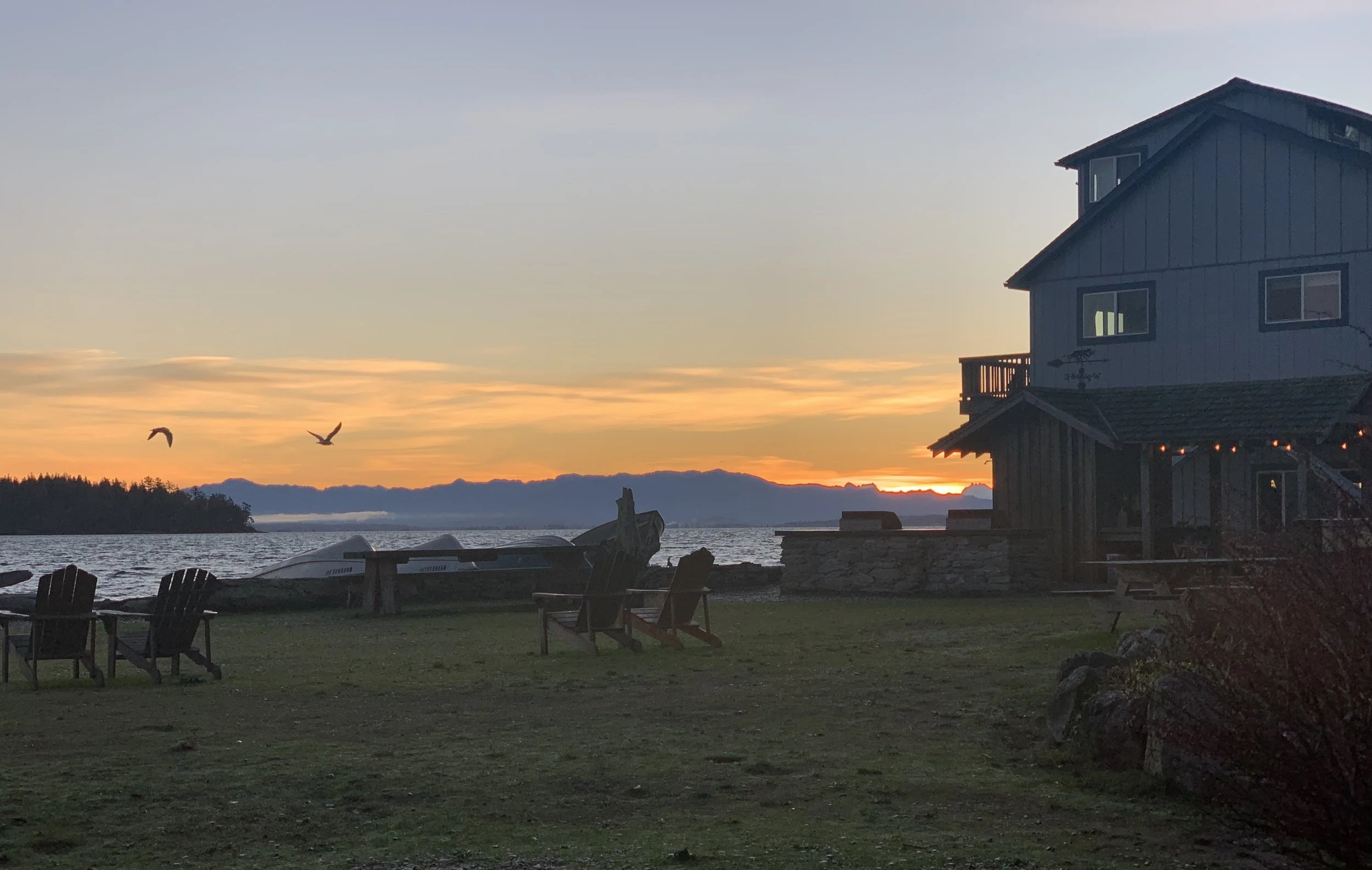
History of the Area
Guemes Island and the surrounding San Juan Islands have a long and fascinating history shaped by explorers, settlers, fishermen and island dreamers.
Long before European explorers arrived, the islands were home to Indigenous peoples, including members of the Samish Nation, who lived along these shores for generations, relying on the rich waters of the Salish Sea for fishing, travel and trade.
European explorers from Spain and Great Britain began charting the islands in the late 1700s, but permanent settlement by Americans and Europeans did not begin until the 1850s. Early residents included British trappers and shepherds, as well as American prospectors returning from unsuccessful gold searches in Canada’s Cariboo region.
Tensions between British and American settlers eventually led to one of the most unusual international disputes in North American history—the Pig War. The conflict began when an American farmer on nearby San Juan Island, Lyman Cutlar, shot a British-owned pig that had wandered into his potato patch. Because the exact boundary between the United States and Canada had never been clearly defined, both nations claimed authority in the islands. Troops were sent, British warships arrived, and for a time it appeared that a shooting war might break out.
Fortunately, cooler heads prevailed. The two nations agreed to jointly occupy the islands until the dispute could be settled. In 1872, arbitration by Wilhelm I ruled in favor of the United States, ending the final territorial dispute between the United States and Great Britain.
In the decades that followed, island life centered on fishing, farming, and maritime trades. The waters around the San Juan Islands also attracted adventurous boaters—and occasionally smugglers and rum-runners who used the maze of waterways to quietly move goods between countries.
Beginning in the 1970s, the character of the islands began to shift. As traditional industries became less profitable, tourism grew, and more people from the mainland were drawn to the islands in search of a quieter, nature-centered lifestyle.
Today the San Juan Islands remain a special place—home to farmers, fishermen, artists, writers, and professionals who can now work remotely while living amid the beauty of the Salish Sea. While transportation and services have improved over the years, the islands have retained the peaceful charm that has long drawn visitors seeking an authentic island escape.
